
Let’s talk about the most common overuse injury in the running world: runner’s knee.
Also known as patellofemoral pain syndrome (PFPS), this is the dull, achy pain you feel around or behind the kneecap, usually worse with stairs, squats, or after a long run. It’s not a torn ligament or a structural injury, it’s a case of the patellofemoral joint getting more stress than it can currently handle, rep after rep, mile after mile.
The instinct is to stop running entirely and wait it out. But research points to a better approach: keep training, just change how you load the knee. Here are three tips, backed by research, to help you train through runner’s knee instead of around it.
① Strengthen Your Hips, Not Just Your Knee
If there’s one finding that keeps showing up across the research, it’s this: weak hips, not weak knees, are usually driving the problem.
Studies on runners and other populations with PFPS consistently show reduced hip abduction and external rotation strength compared to pain-free controls, along with delayed and shorter gluteus medius activation during running and stair negotiation. When the glutes fire late or weak, the thigh drifts inward with every stride, which increases the angle the kneecap has to track through and raises stress on the joint.
The fix isn’t complicated. A systematic review of the PFP literature found that hip-strengthening exercise reduced pain and improved function, and a randomized controlled trial specifically found that adding hip-strengthening work to a standard knee exercise program produced better long-term outcomes than knee exercises alone.
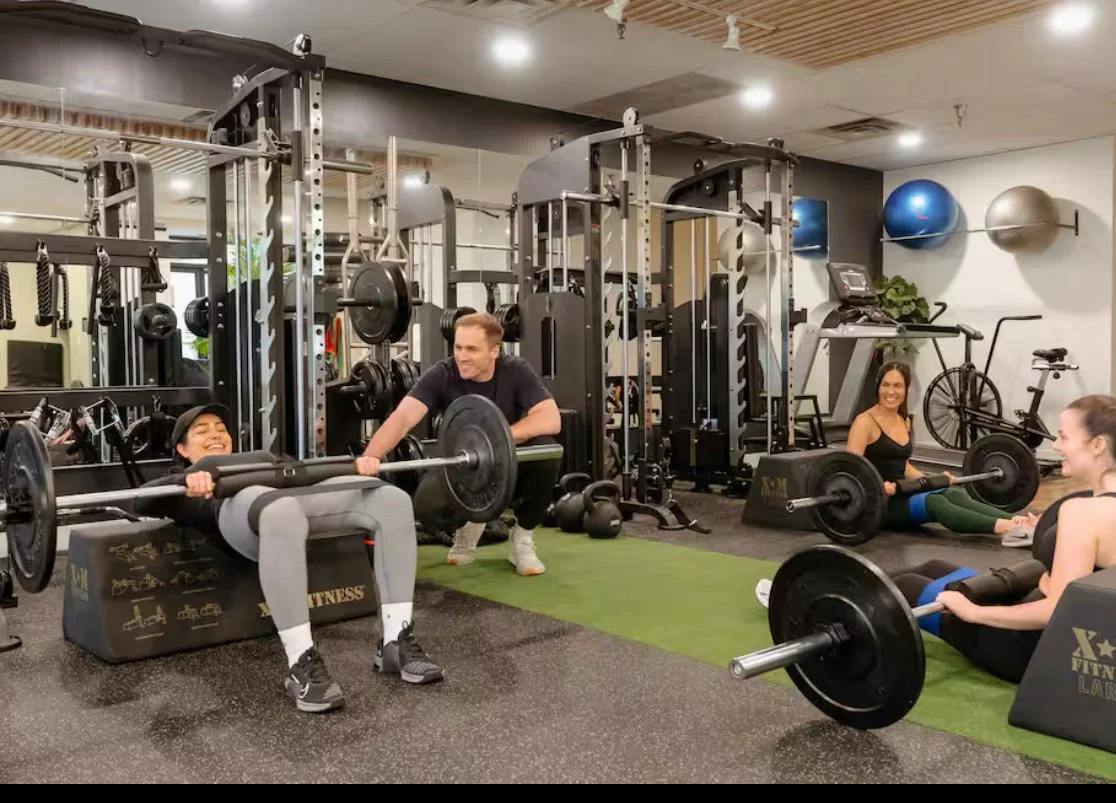
A simple starting point:
Side-lying hip abduction and clamshells, 2–3 sets of 15 reps per side
Single-leg glute bridges or hip thrusts
Lateral band walks (monster walks) before runs to wake up the glutes
Single-leg squats or step-downs, focusing on keeping the knee tracking over the toes rather than caving inward
Do this consistently for a few weeks and most people notice their knee tracks straighter without even thinking about it.
② Foam Roll and Stretch the Quads and IT Band
Tight, stiff tissue around the knee doesn't cause PFPS on its own, but it does change how much pull gets placed on the kneecap and how well it tracks through its groove. Loosening things up is a simple, low-effort way to take some of that tension off.
A randomized controlled trial in patients with patellofemoral pain compared foam rolling versus static stretching of the quadriceps, hamstrings, and IT band (on top of a standard strengthening program), and found both approaches produced meaningful improvements in knee range of motion and functional scores. Separate research on the IT band specifically shows that foam rolling and stretching can measurably increase hip adduction range of motion, which matters because a tight IT band pulls laterally on the kneecap and worsens tracking.
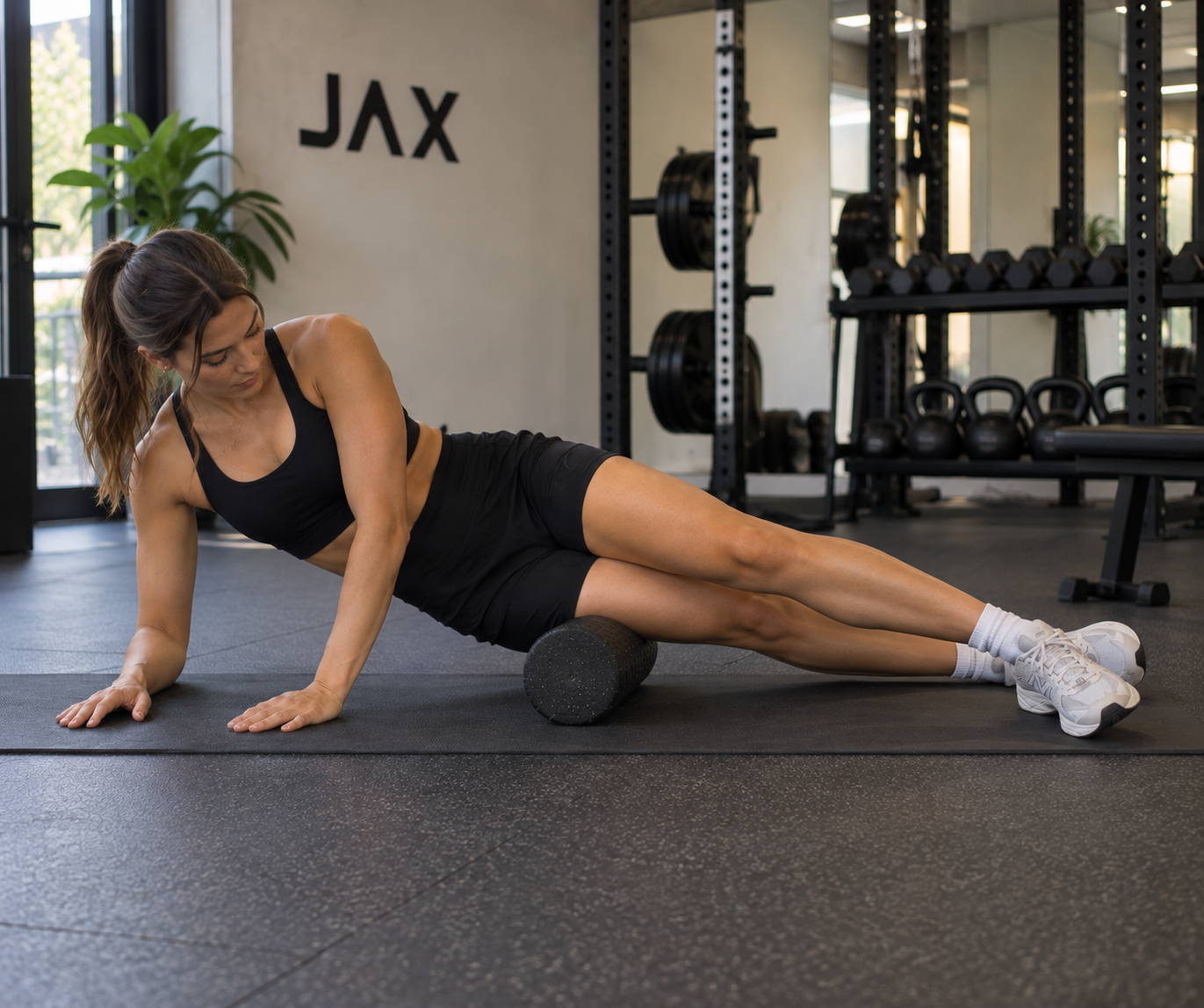
A simple routine to add before or after your runs and lower-body sessions:
Foam roll the quads, 1–2 minutes per leg, pausing on tender spots for 20–30 seconds
Foam roll the IT band (outer thigh) at a similar dose, this is often the sorest spot, so ease into it
Static quad stretch (standing, heel to glute), holding 30 seconds x 2–3 per leg
Standing IT band/hip stretch, crossing the affected leg behind the other and leaning away, 30 seconds x 2–3 per side
This isn't a replacement for the strengthening work in tip #1, think of it as clearing the runway so that strengthening work can actually change how your knee moves..
3. Load the Knee Progressively, Don't Just Rest It.
The instinct with an achy knee is to stop everything that hurts. But full rest tends to just delay the same pain when you inevitably start back up, because the tissue never adapts to handle load again.
Research comparing exercise-based rehab approaches for PFPS (including trials that compared surgery-plus-exercise against exercise alone) consistently shows that a structured strengthening and loading program is the primary, evidence-based treatment, not passive rest. The key is managing how much load the knee sees and building it back up in a way it can tolerate.
A practical approach:
Temporarily reduce mileage or intensity rather than stopping entirely, cross-train with cycling or swimming if running is too painful
Build quad and hip strength with pain-free range of motion first (think: shallow squats, leg press, step-ups) before progressing depth and load
Reintroduce running volume gradually, using pain as your guide, mild discomfort during activity that settles quickly afterward is generally fine; pain that lingers or worsens the next day means you pushed too far
Keep the hip strengthening and foam rolling/stretching from tips #1 and #2 running in the background the whole time, they aren't a phase you finish, they're part of the ongoing plan
Think of it less as "resting the knee" and more as "retraining it to handle the job you're asking it to do."
The Bottom Line
Runner's knee usually isn't a sign that running is bad for you, it's a sign your hips and tissue quality haven't quite caught up to your training. Strengthen the hips, foam roll and stretch the quads and IT band, and manage load progressively instead of avoiding it entirely. Most runners see meaningful improvement within a few weeks of consistent work.
If pain is severe, doesn't improve after a few weeks of these changes, or you notice swelling, locking, or instability in the joint, that's your cue to see a physical therapist or sports medicine doc.